

House II · Mezcal Espadín · Oaxaca
Mezcal
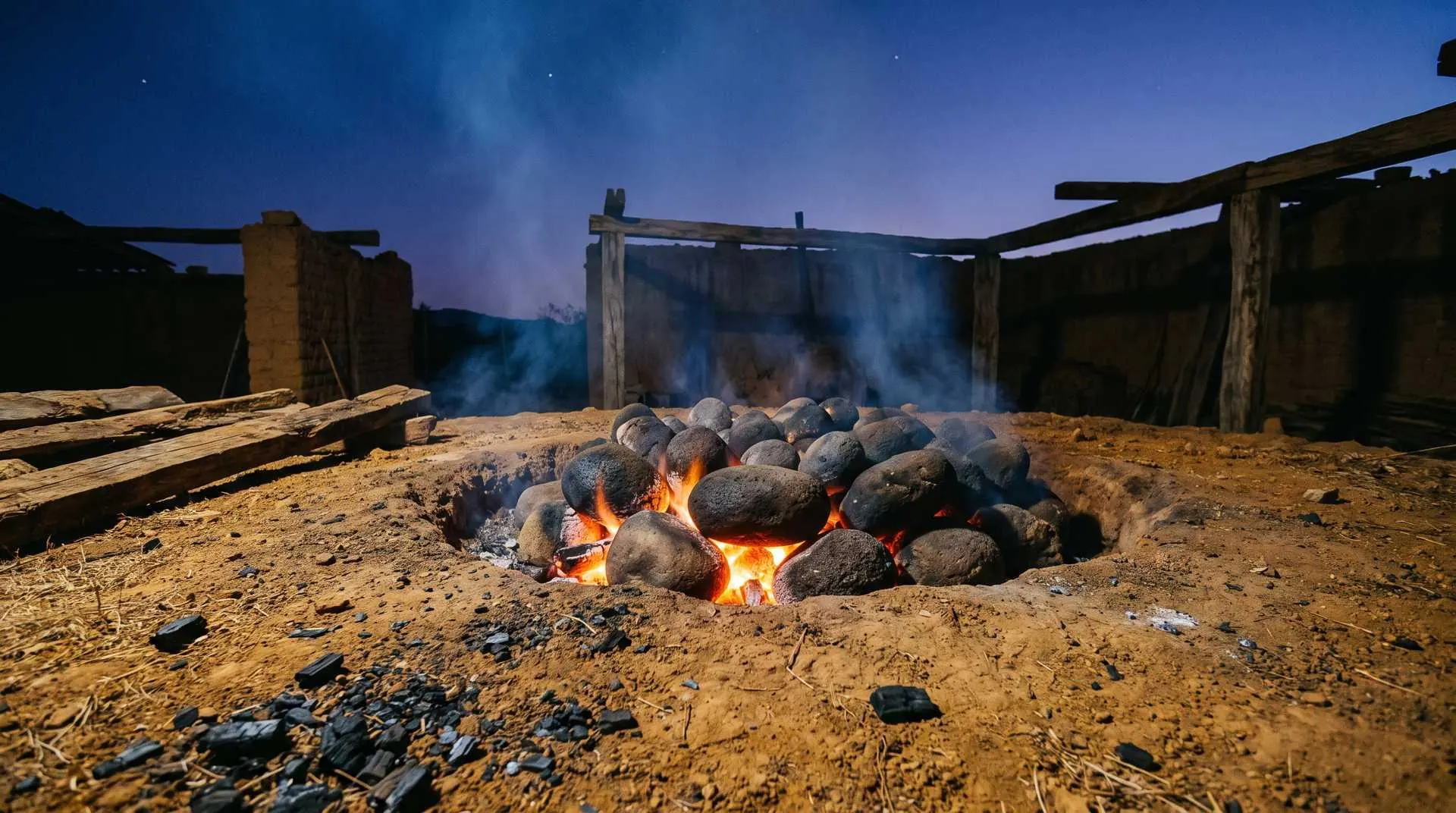
Red-hot stone, earth on top and days of waiting.
Oaxaca · Agave angustifolia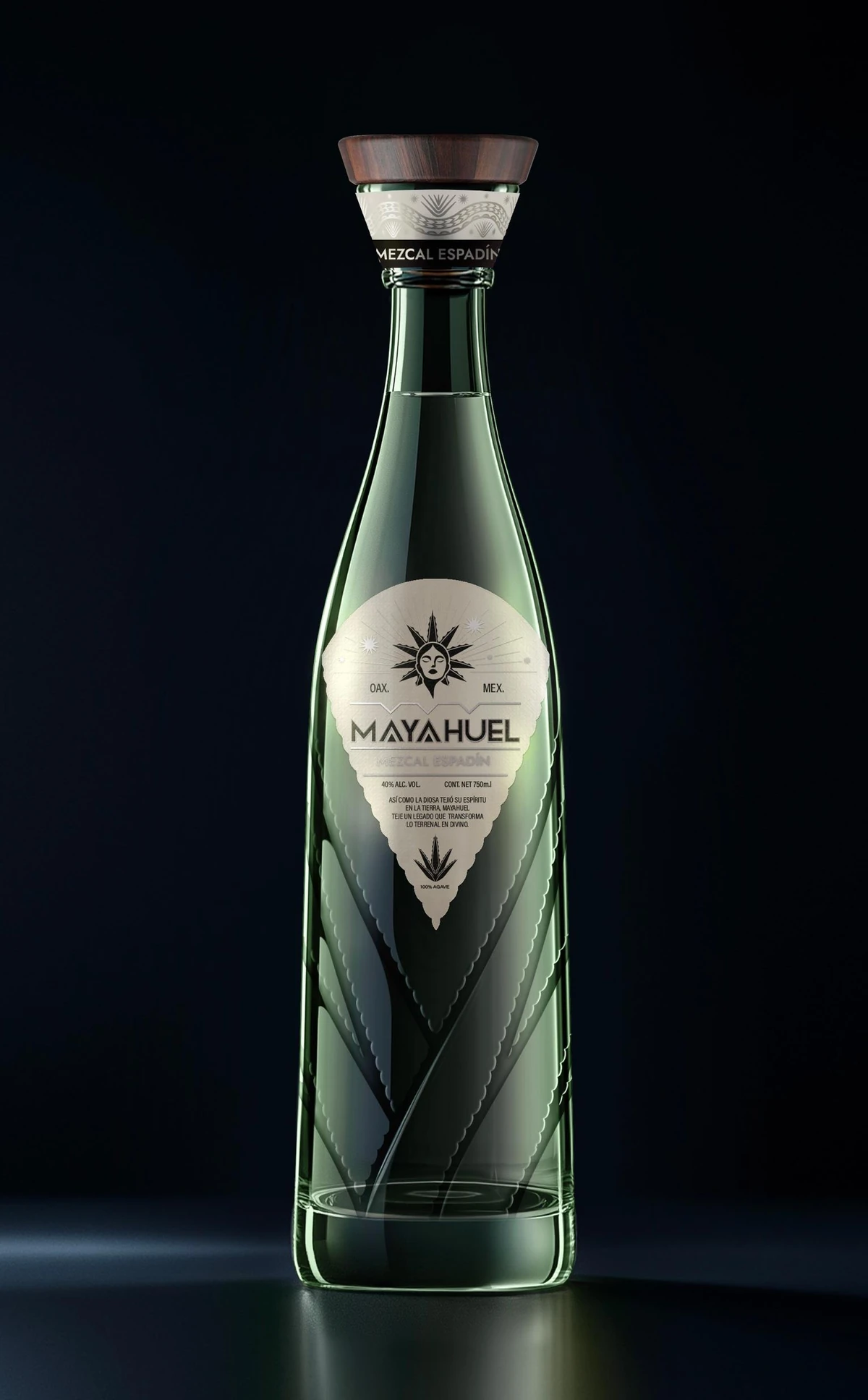
The bottle
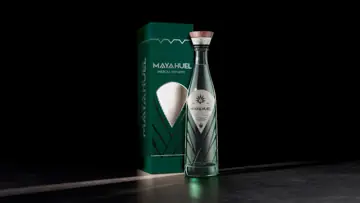
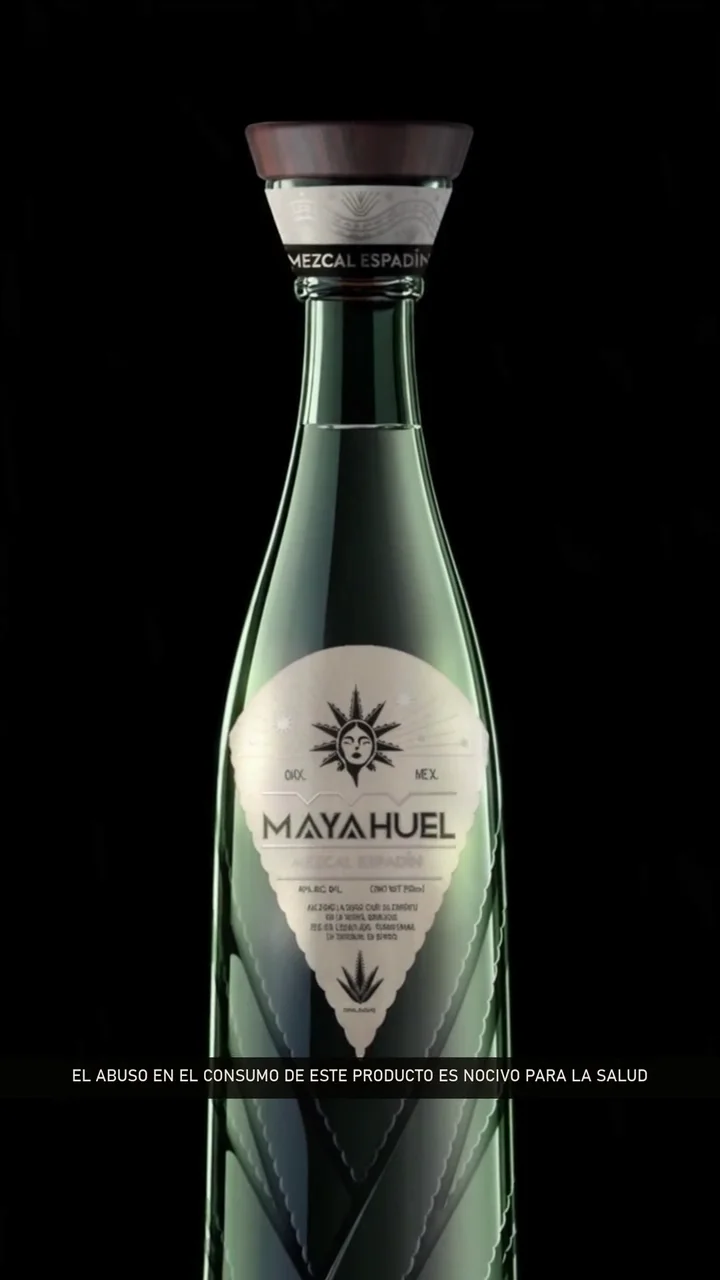
Green as its leaves.
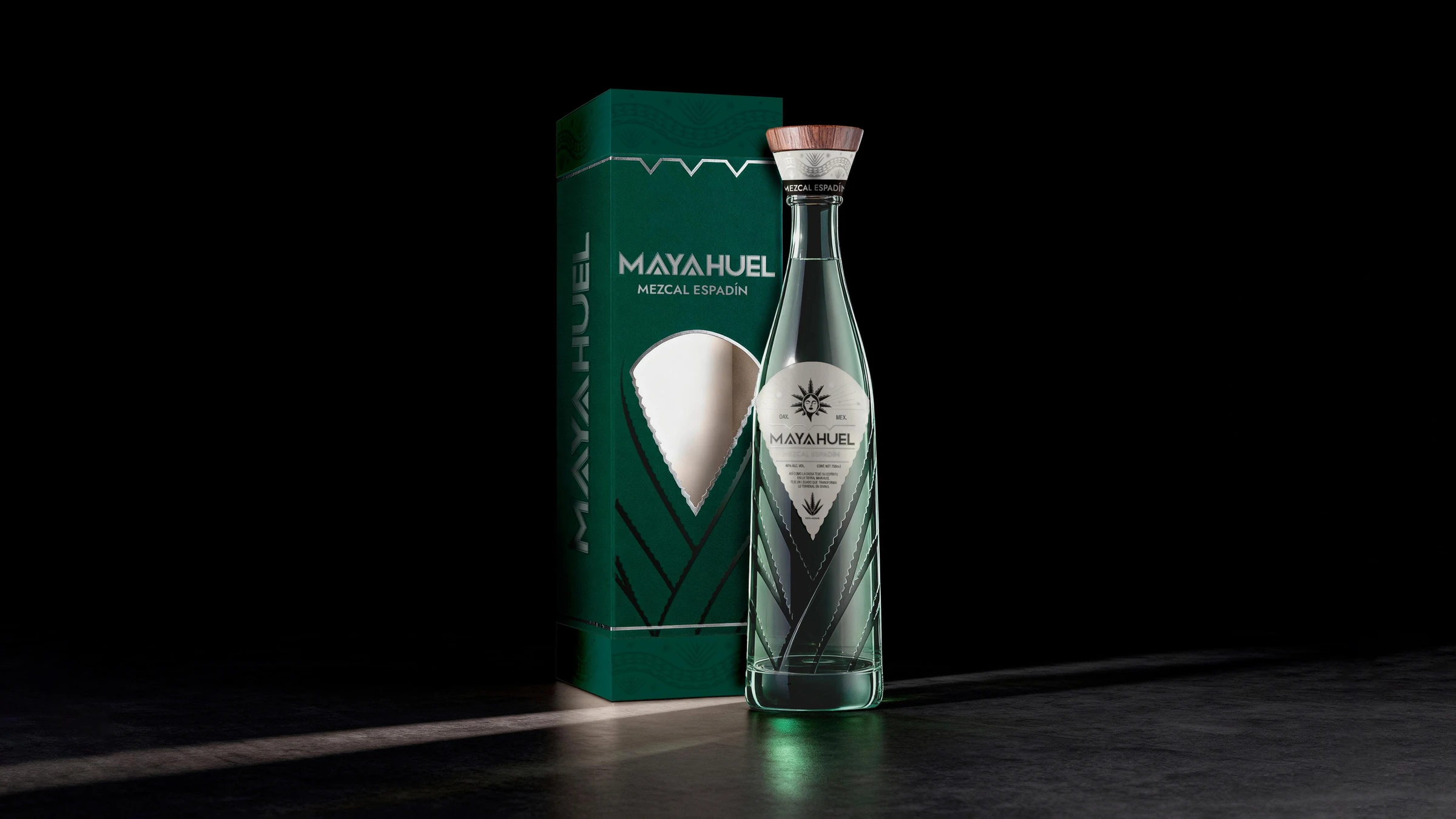
Green glass with espadín leaves in relief rising from the base, a wooden stopper and a label shaped like a leaf tip. Above, the emblem of the goddess among rays of agave; below, “Oax. · Mex.”.
“As the goddess wove her spirit into the earth, Mayahuel weaves a legacy that turns the earthly into the divine.”
Mezcal Espadín
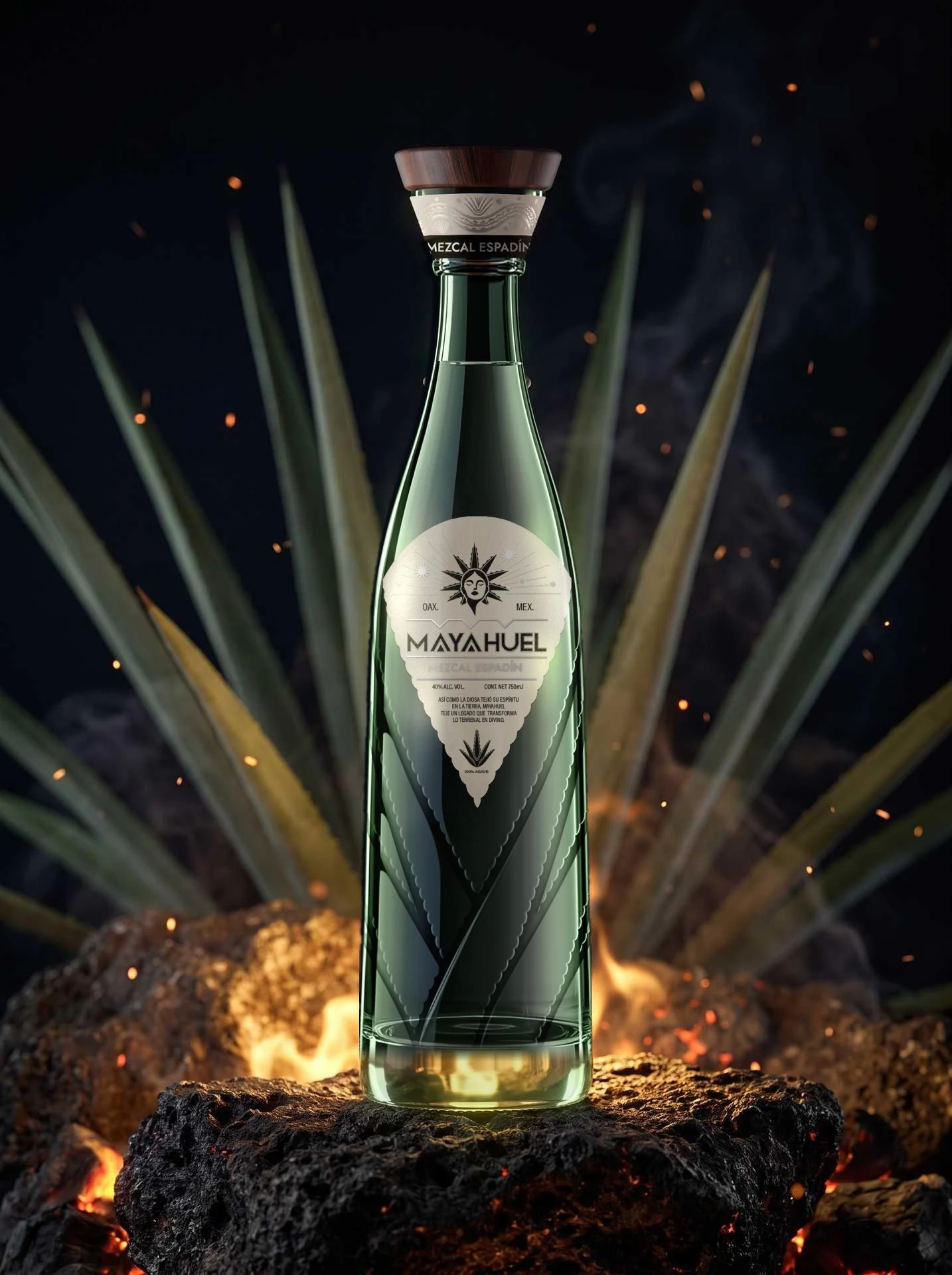
The fire of Oaxaca, in green glass.
The film
The fire of Oaxaca, in green glass.
Espadín, clay and ember: Mayahuel’s mezcal in fifteen seconds.
Mezcal is never hurried. Nor is its land.
Mayahuel’s second house is a mezcal from Oaxaca, made with espadín agave, Agave angustifolia. Oaxaca lies within the mezcal denomination of origin and is the land where this craft has the most masters.
The palenque and the master mezcalero will be announced soon. This page tells how an espadín mezcal is made.
The pit oven
A pit is dug, stones are heated with wood until red-hot and the agave hearts are laid on top. Everything is covered with earth. The smoke comes from that oven.
The milling
The cooked agave is crushed with a wooden mallet or a tahona, according to the palenque's tradition.
The distillation
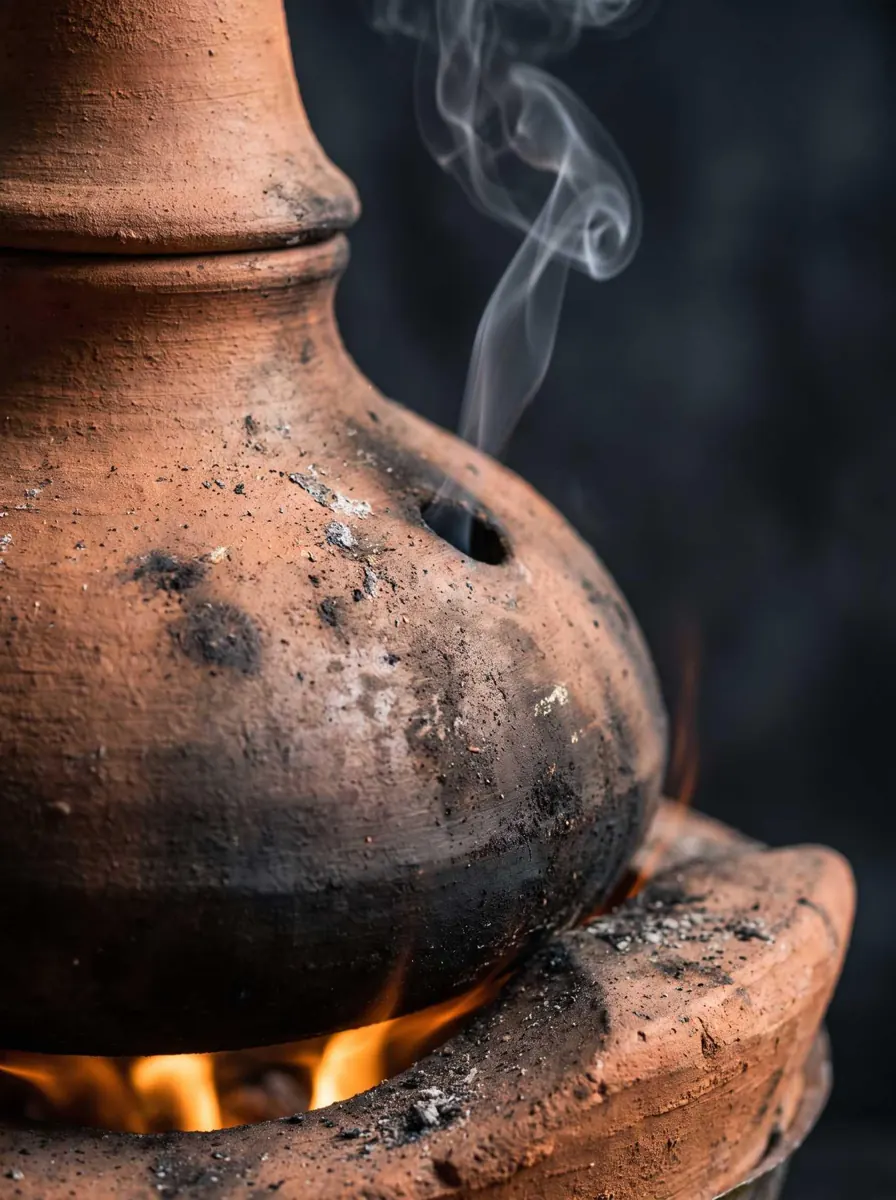
The fermented must runs through copper stills or clay pots. In the ancestral category, the clay pot is mandatory.
Mezcal Espadín · Embers
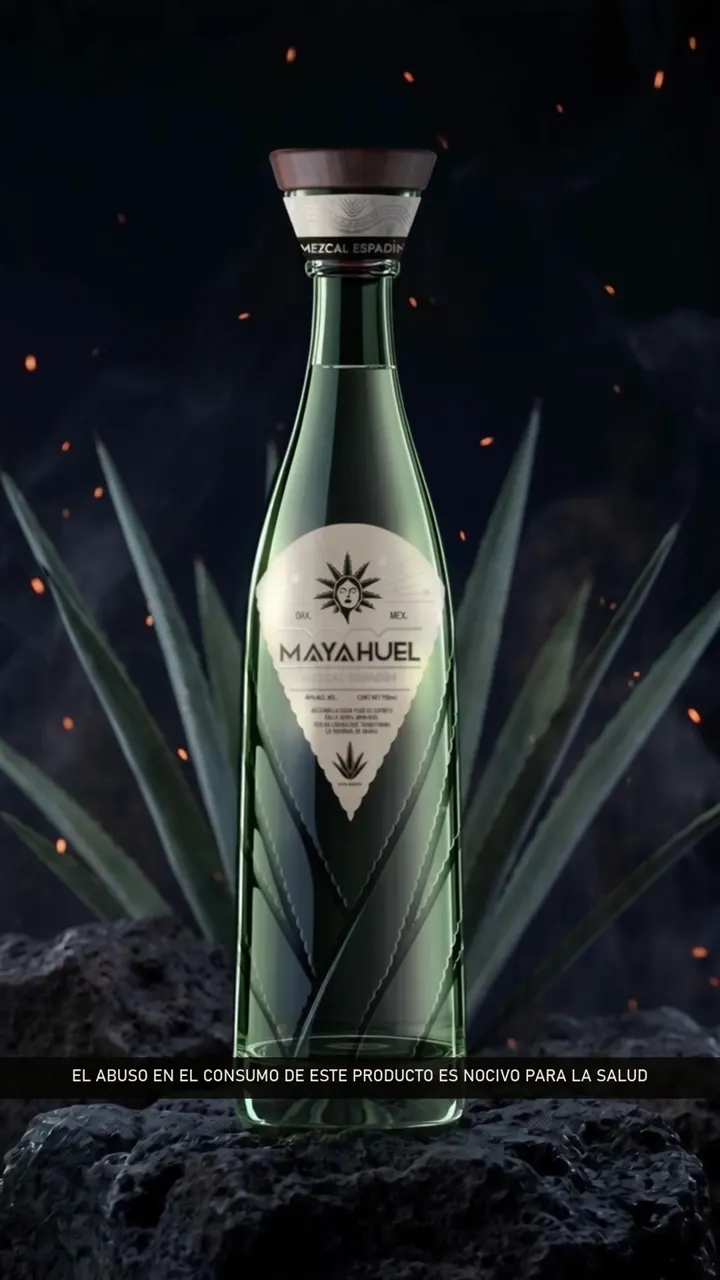
Earth, clay and ember.
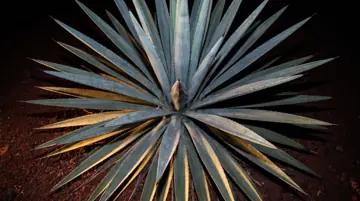
The three moments of mezcal, told in images: the espadín, the pot and the fire.
The categories of the standard
Two ways of making it by hand
Artisanal NOM-070
Pit or masonry oven. Milling by mallet, tahona, mill or shredder. Distillation in copper or clay.
Ancestral NOM-070
Pit oven. Milling by mallet, tahona or Chilean or Egyptian mill. Distillation in clay pots only.
To understand it
Questions about the mezcal
Does all mezcal taste smoky?
Not always, and never to the same degree. The smoke comes mostly from the earthen pit oven, where agave cooks over wood and stone underground; the agave species and the distillation also shape the profile.
Why Oaxaca and not Amatitán?
Mezcal has its own denomination of origin and its own masters. Oaxaca lies within it and is its best-known land; the tequila, meanwhile, stays in the Barranca de Amatitán.
What is espadín?
It is Agave angustifolia, the most widely grown agave for mezcal in Oaxaca. Its leaves are long, narrow and rigid, and it usually ripens in the field for six to eight years.
What is a clay pot still?
A still made of clay instead of copper. It is the way of distilling required by the standard's ancestral category.
Third house